Buying Guide · 2026-02-23 · 5 min read
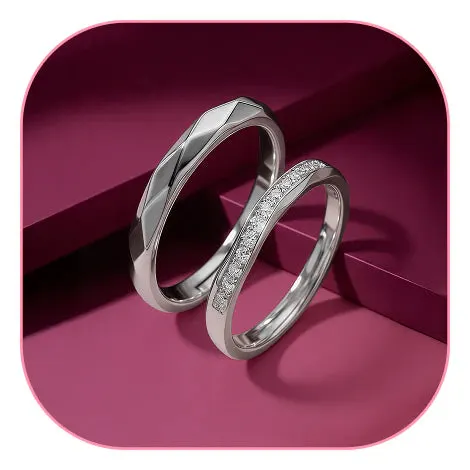
Fingers are naturally a little larger later in the day and in warmer weather, and slightly smaller first thing in the morning or in the cold. Measure in the evening, after your hands have been at normal temperature for a while, for the most realistic size — and always measure the specific finger the ring is meant for, since sizes can differ noticeably between hands and fingers.
Wrap a thin strip of paper or a piece of non-stretchy string snugly around the base of your finger — snug enough that it doesn’t slide over the knuckle, but not tight. Mark the point where it overlaps, then lay it flat and measure the length from the start to the mark in millimetres.
That measurement is your finger’s circumference. Compare it against a standard ring size chart (widely available online) to find your corresponding size — most Indian retailers use a numeric scale that maps directly to this measurement.
If you have a ring that fits the same finger comfortably, measure its inner diameter (the distance straight across the inside of the band, not around it) in millimetres using a ruler. This tends to be more accurate than the string method since it’s measuring a fixed, rigid shape rather than something that can be pulled slightly tight or loose.
If your measurement falls between two standard sizes, it’s generally safer to round up. A slightly looser ring is comfortable and easy to adjust for (a sizer or wearing it on a slightly different finger), while a ring that’s truly too tight can be difficult or impossible to remove comfortably, especially with wider bands.